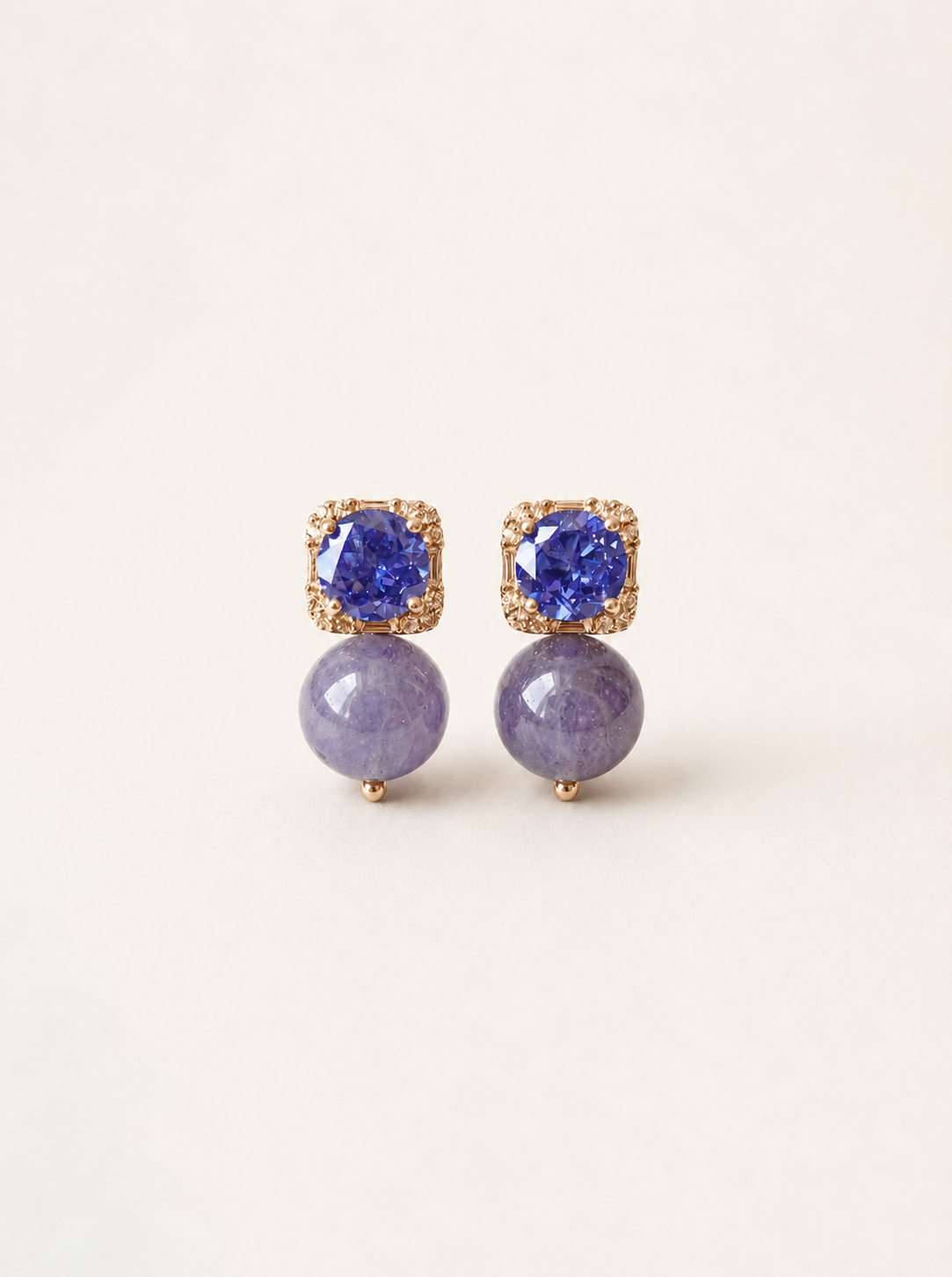
Jewellery care guide: Click below
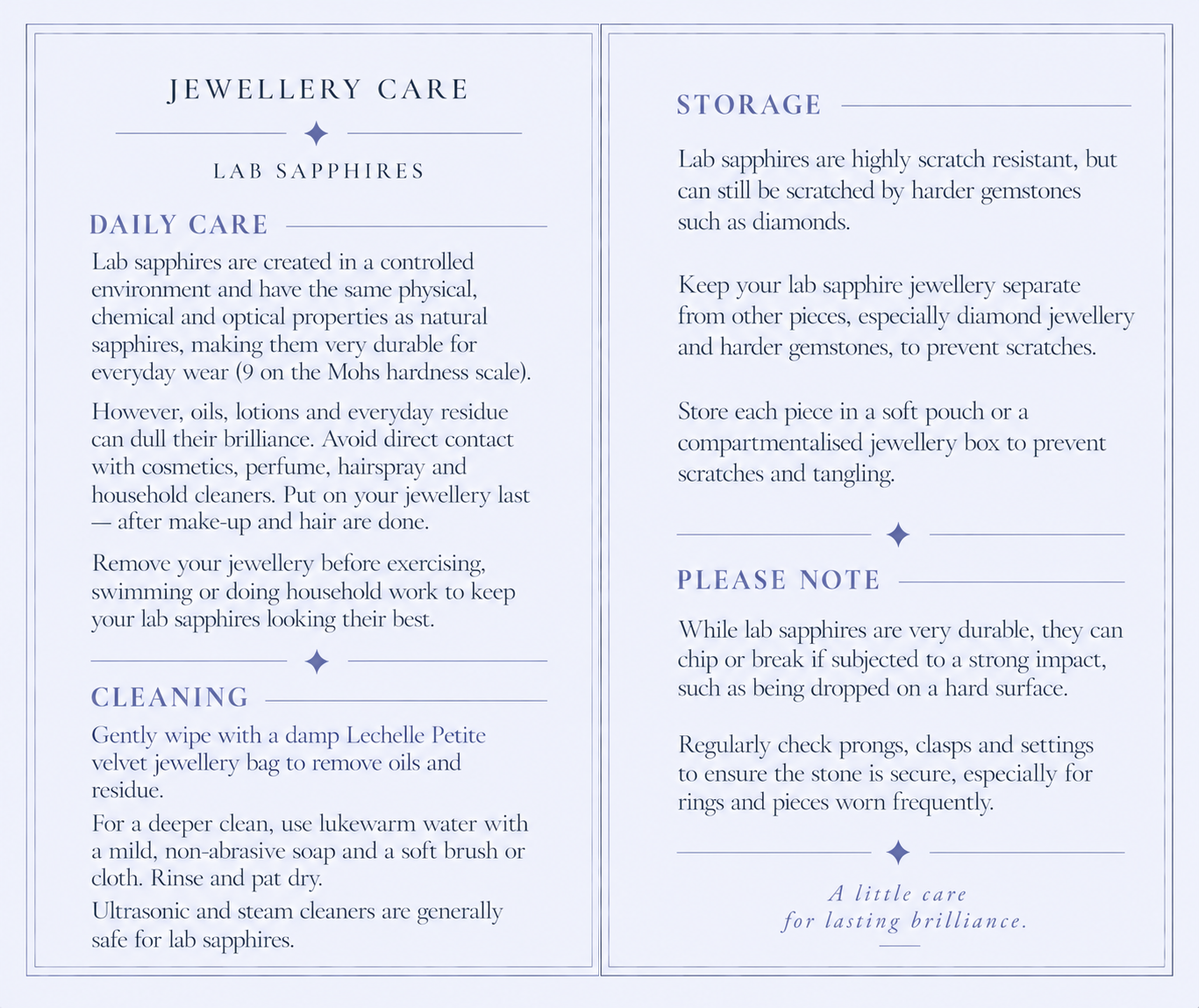
How should I care for my fine jewellery?
WEAR
Fine jewellery is made to be worn and enjoyed, but a little care will preserve its beauty.
Remove jewellery before exercising, swimming, showering or doing household work. Avoid direct contact with perfume, hairspray, lotions, chlorine and harsh chemicals.
Put your jewellery on after cosmetics and fragrance, and remove it before strenuous activity or sleep.
CLEAN
For solid gold and platinum jewellery, gently clean with lukewarm water, mild soap and a soft brush or cloth. Rinse thoroughly and pat dry.
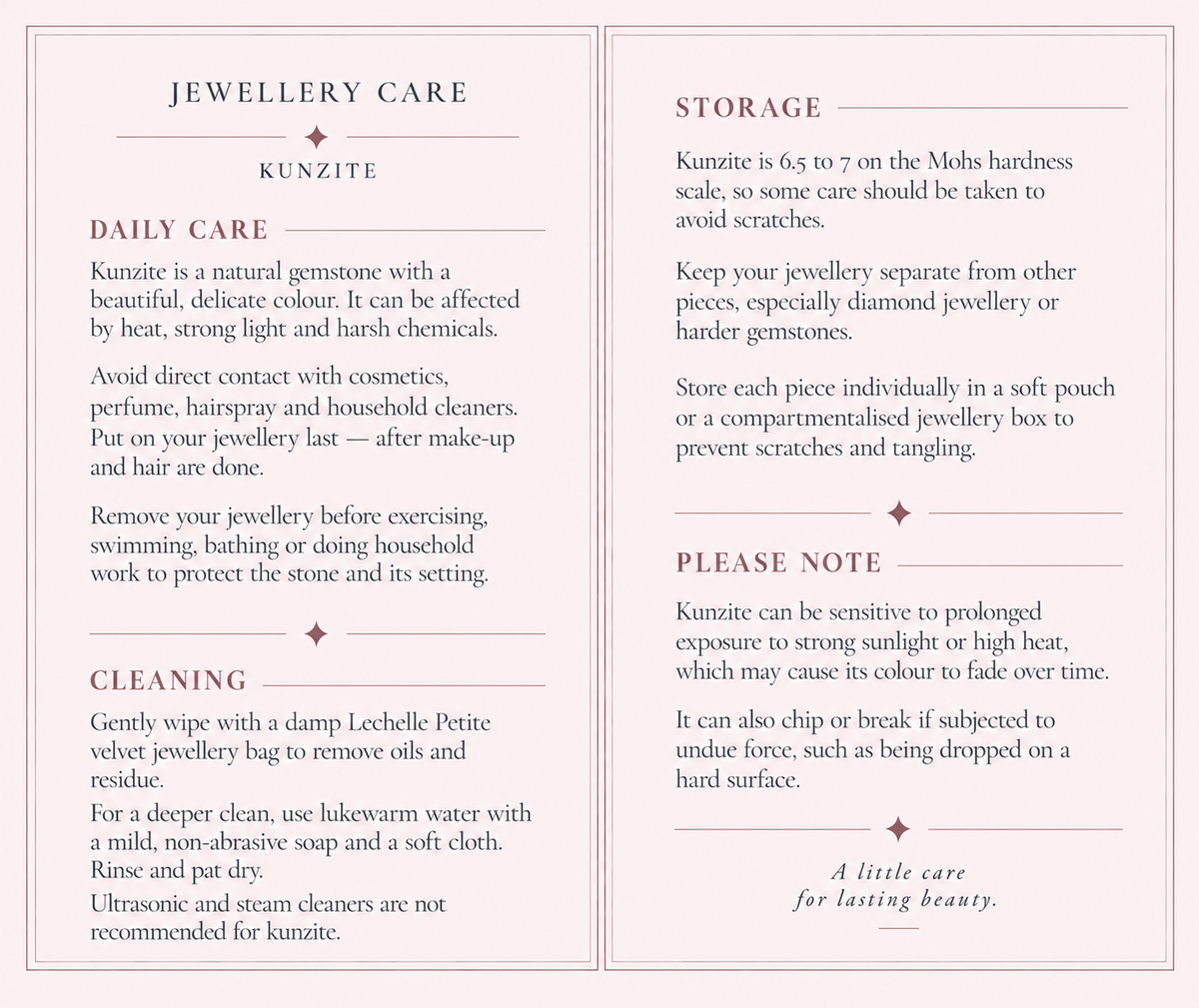
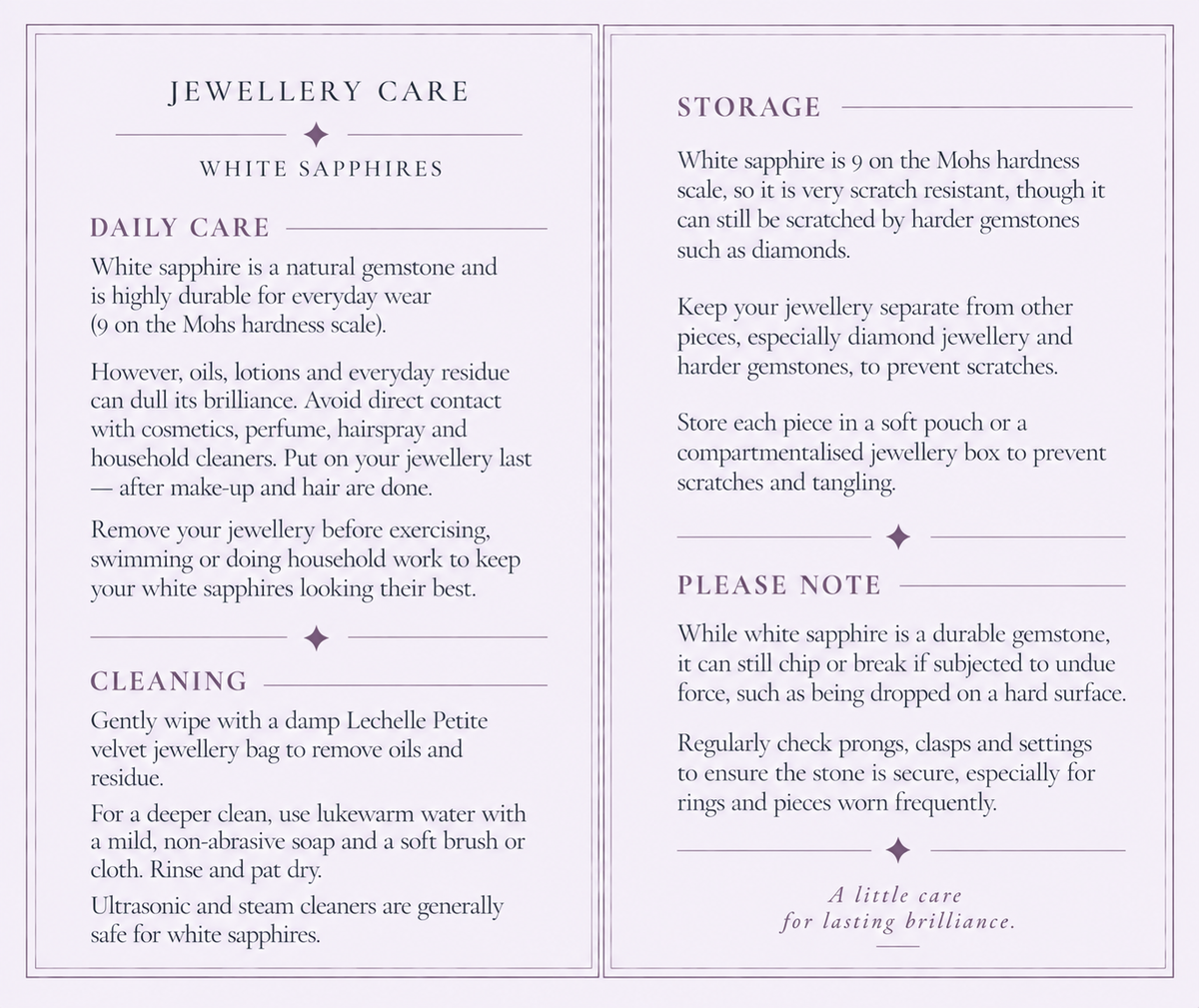
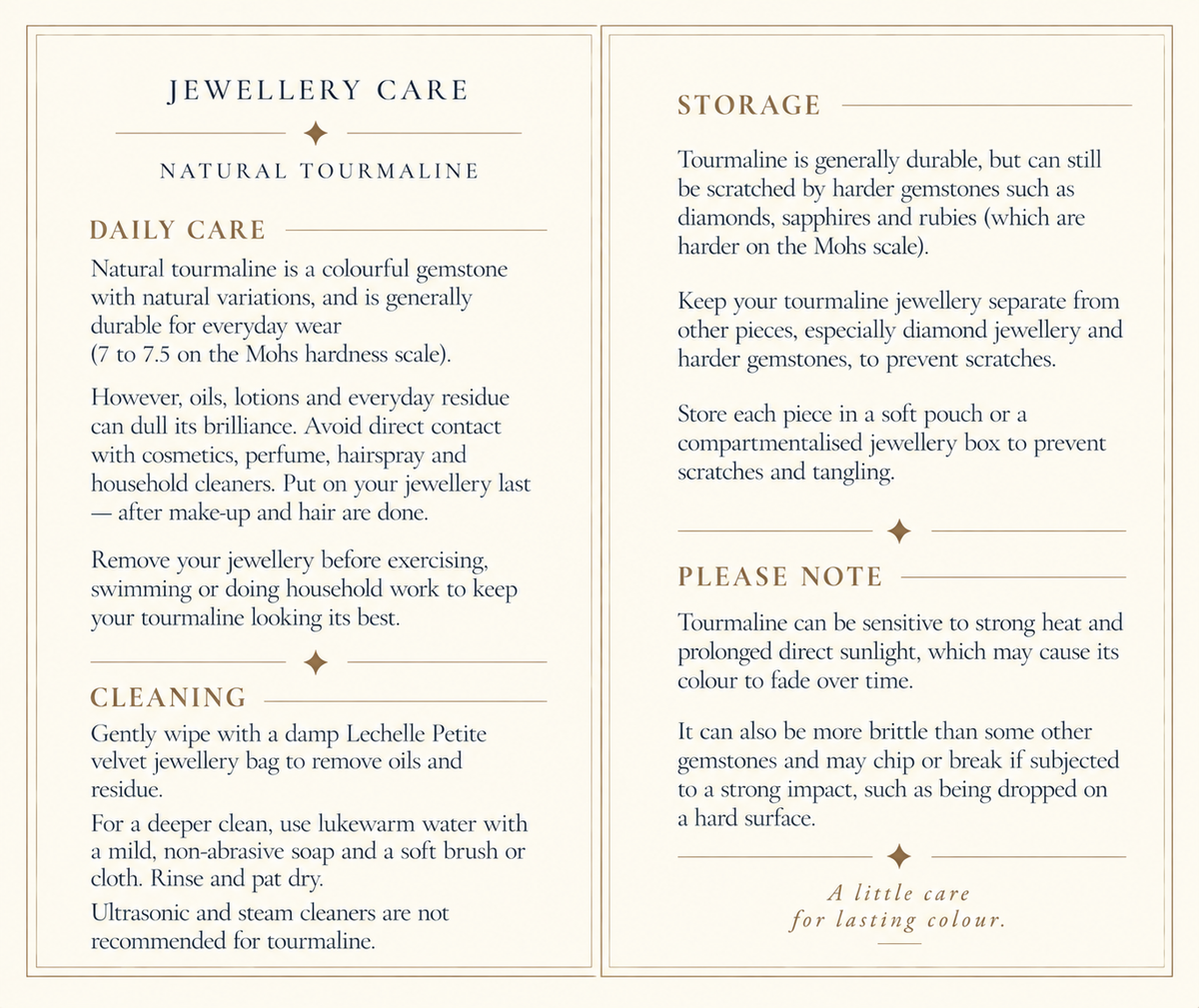
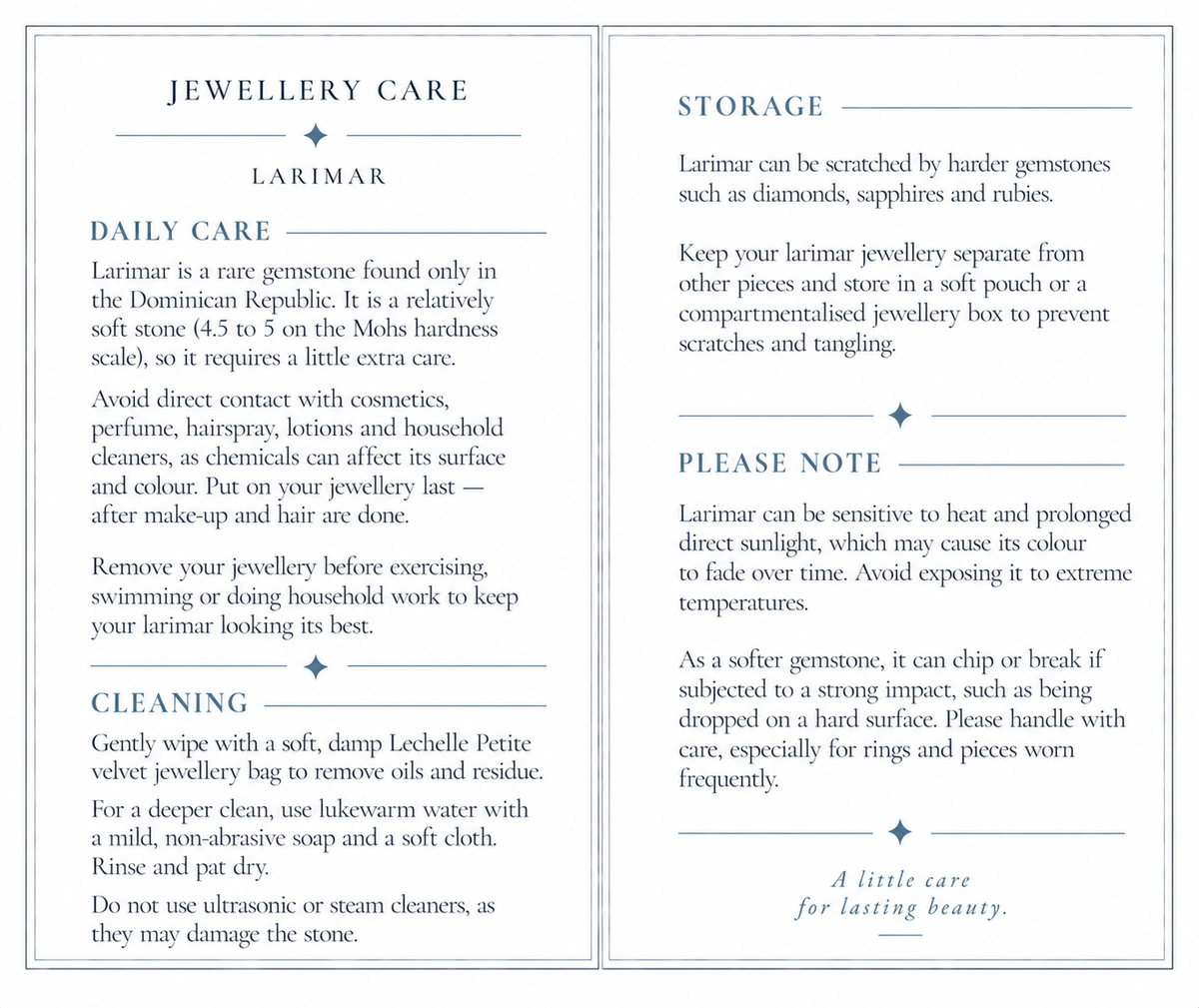
For gemstone jewellery, cleaning requirements vary by stone. Some gemstones should not be exposed to ultrasonic or steam cleaners, so please refer to the care instructions for your specific gemstone.
PALLADIUM SILVER
Our palladium silver is a fine silver alloy created for a bright finish and enhanced resistance to tarnishing compared with conventional sterling silver.
CARE
Gently wipe your jewellery with a soft, lint-free cloth after wearing to remove perspiration, oils and residue.
Silver can naturally develop tarnish over time. This is a surface reaction and does not mean that the jewellery is damaged.
For pieces with an 18K gold overlay, avoid abrasive polishing cloths, chemical silver cleaners and excessive rubbing, as these can gradually wear away the gold finish.
STORE
Store jewellery individually in a dry pouch or jewellery box to reduce scratching, tangling and exposure to humidity.
Keep diamond jewellery separate from softer gemstones and metals, as diamonds can scratch other pieces.
PLEASE NOTE
Plated finishes naturally change with wear and may require replating over time. The rate of wear depends on how frequently the piece is worn and its exposure to moisture, chemicals and friction.
Treat your jewellery thoughtfully, and it will remain beautiful for years to come.
Made to be worn. Made to be loved.
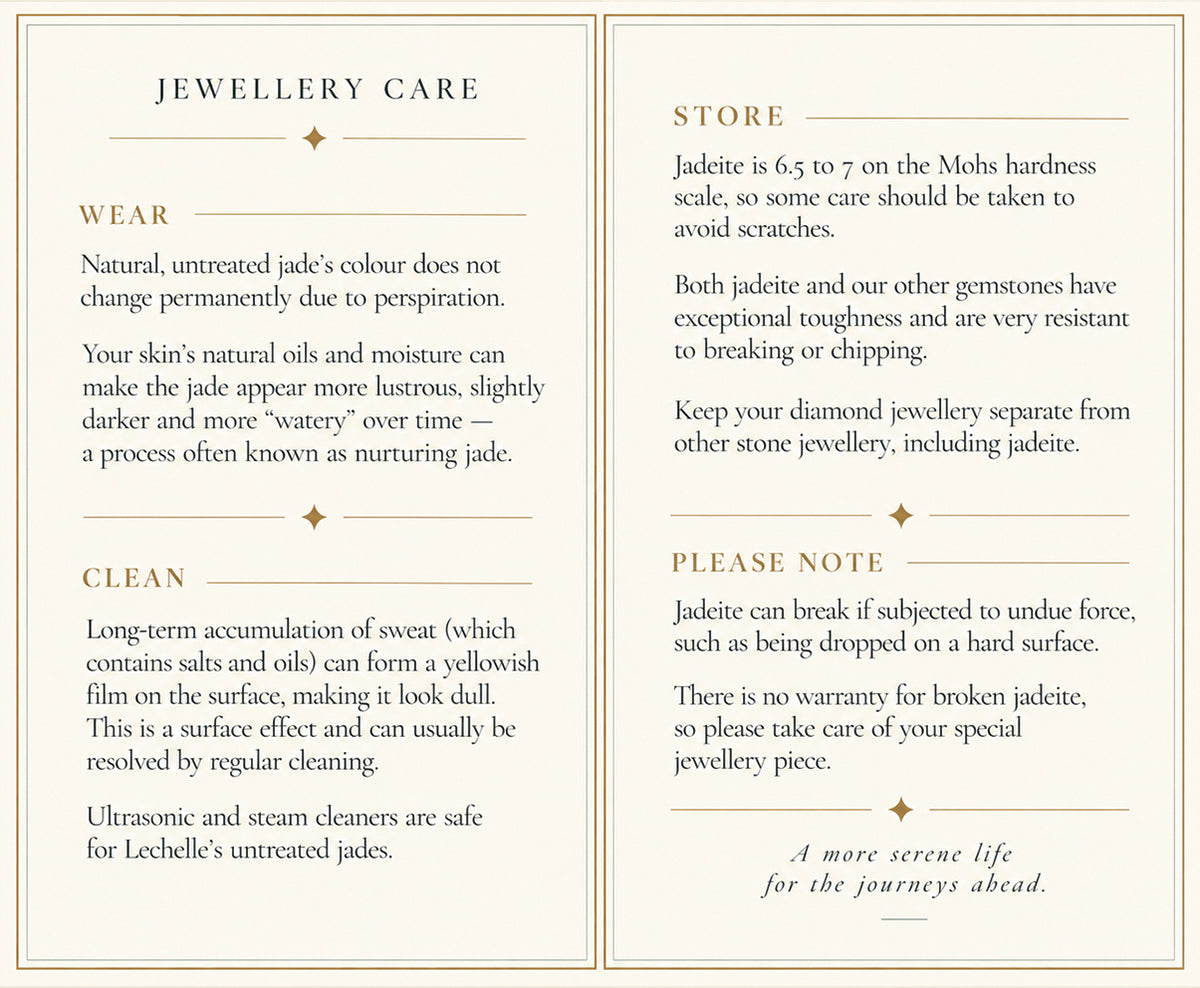
Jadeite
Serenity
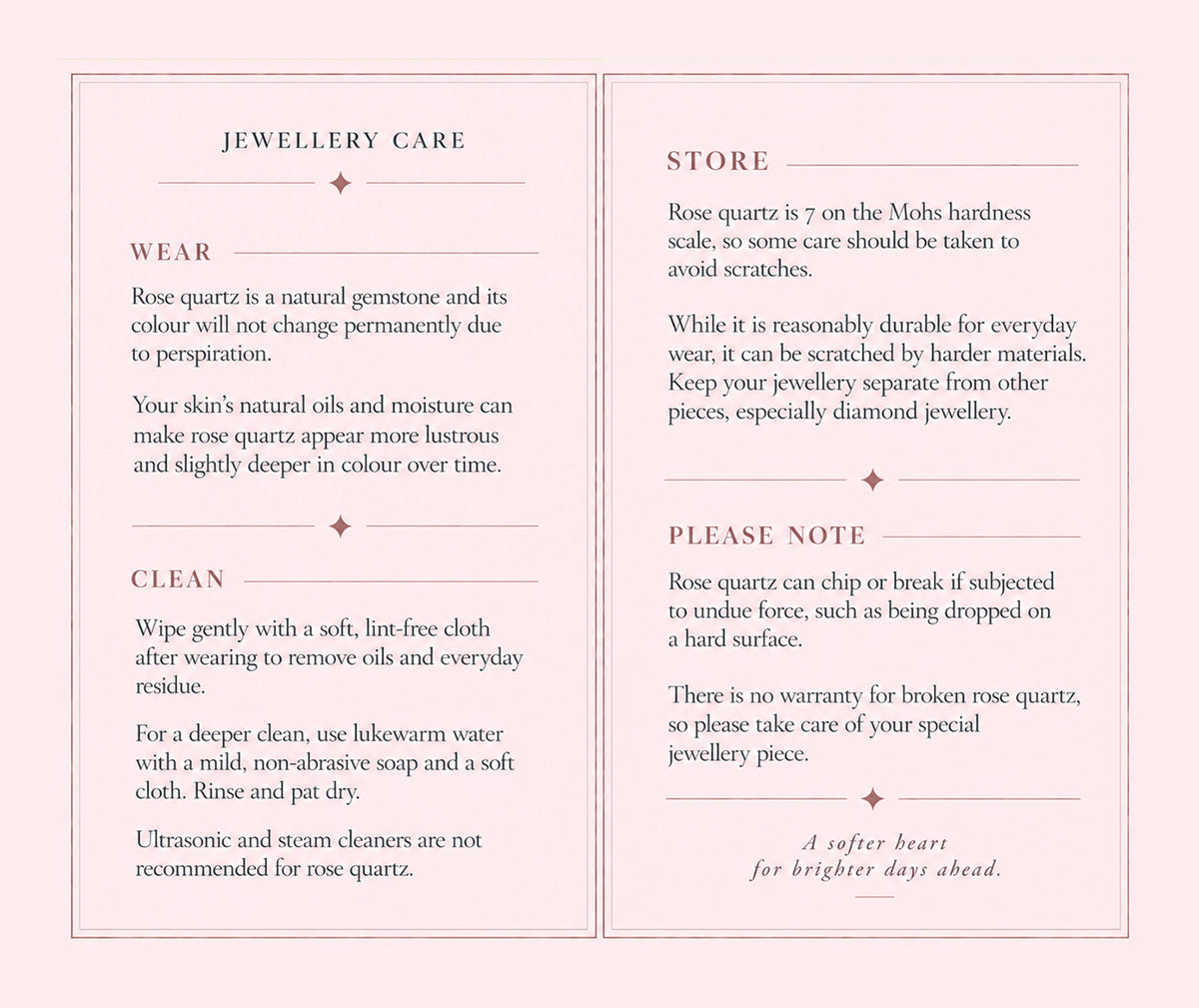
Rose quartz
Love
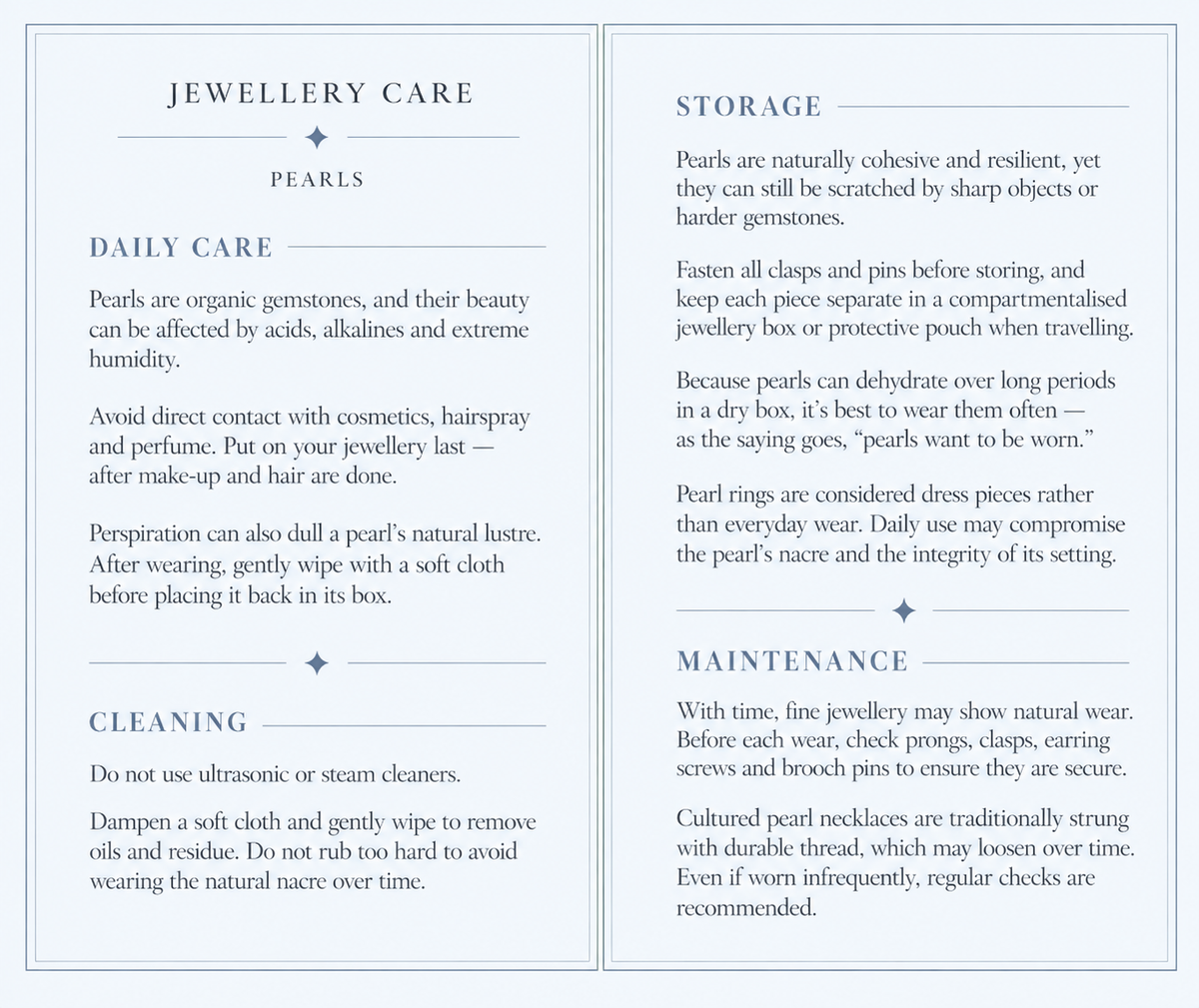
Pearls
New beginnings
Kunzite
Independence
Diamonds
New Beginnings

White Sapphires
New Beginnings
Natural Tourmalines
Individuality
Larimar
Freedom
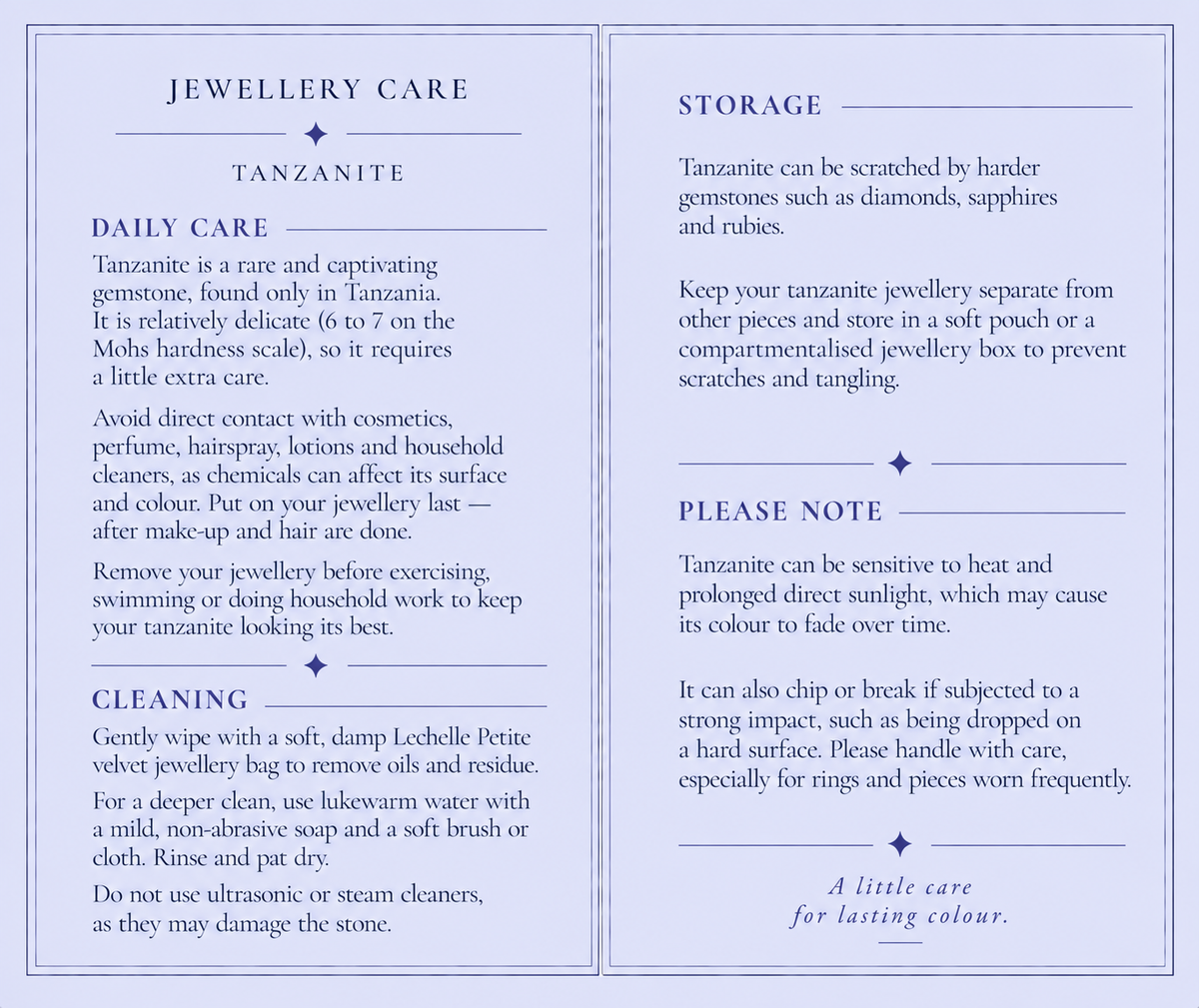
Tanzanite
Independence
Lab-Sapphires
Across lexicon